


Growth Marketing for Highly Technical Enterprise B2B Audiences: A Complete Guide
Start With Two Ideal Customer Profiles
The biggest upfront difference is that you need to speak to the champions of those organizations. These people aren't necessarily the ultimate decision makers, but they are the end users and influencers of the decision to choose your product.
So the very first thing you need to do is develop two different ideal customer profiles.
The first ICP should be the people championing your solution in their organization — a.k.a. the end user.
The second ICP should be the ultimate decision maker — the one who holds the buying power and ultimately decides whether to purchase your solution.
Map the Conversion Pathway to Your Champion
Drilling down on the first ICP: if they are likely the one initiating sales conversations and getting the ball rolling, you want to map the conversion pathway for them appropriately.
What I mean is that your website should primarily cater to the end user and ensure the call to action they resonate with best is the primary call to action. For highly technical audiences, this is usually a free trial, free docs review, or on-demand demo.
You likely will not want to push these people to book a call with your sales team. They are highly technical and would rather figure out the tool on their own to see if it accomplishes their needs, not talk to someone in sales.

As a caveat — if your conversion pathway usually starts with the ultimate decision maker and not the influencer, then your website should speak to the ultimate decision maker, who is maybe somewhat less technical. In that case, booking a sales call can be the primary call to action. However, for most highly technical B2B enterprise solutions, you will be working with the champions, which is why we lead with the champion demand generation strategy.
Getting this right will single-handedly make or break your demand generation motion. Focus a lot of time and energy on getting these ICPs correct and improving the positioning on your website and owned assets to speak to the people who initiate the buying journey — not the people who hold the buying power, but the people who start the conversation.
Later on, you can share other sales enablement collateral and have sales calls with the decision makers who hold buying power. These folks don't necessarily start by looking at your website, so it's important to speak to the champions who come through any inbound channels from your demand generation marketing.
Show Up Where Your ICP Spends Their Time
After you get your ICPs and conversion pathways figured out, the next most important thing is to lean into the appropriate forums.
You want to show up where your ICP spends most of their time. This will likely be LinkedIn ads, potentially Reddit ads, X ads, and other paid variants for podcast or newsletter promotions, depending on the ICP makeup.
Developing your marketing funnel — assuming you have zero demand around these channels — is crucial if you want to become someone who shows up on a day-zero list for your category.
Build Out the Top of the Funnel
This goes back to positioning the problem your ICP faces at the top of the funnel and creating interest and curiosity with problem-driven messaging and imagery for top-of-funnel ad placements.
Going one step further, you can also include solution-oriented messaging and creative for top-of-funnel and middle-of-funnel content.

Layer in Middle-of-Funnel Education
Another thing to add in the middle of the funnel is education-based collateral. This likely takes the form of e-books, downloadables, or thought leadership — how your solution stacks up in the space and solves problems your ICP faces on a daily, monthly, or quarterly basis.
The key is that the content has to be high quality, take a unique standpoint on a well-documented problem, and be worth the email address they're providing to download it.
If the content is bad, diluted, or AI crap, it will work against you and position your brand as inferior to competitors with better content — so it's crucial you get this right. It's better to not run downloadable content if it isn't valuable.
Drive Action at the Bottom of the Funnel
Once you have the top and middle of the funnel built out, the bottom of the funnel is where you start pushing your primary call to action across your website. This could be an on-demand demo, a free trial, or comparison or competitor-specific messaging. It needs to be highly targeted and call out a specific offer that your ICP — now warmed up to you — should be willing to make.
Again, the key is that these ads are positioned to the ICP that primarily gets the conversation started, whether that's:
- downloading something
- getting started with a free trial
- watching an on-demand demo
- talking to sales
It needs to be the call to action that usually gets the conversation started.
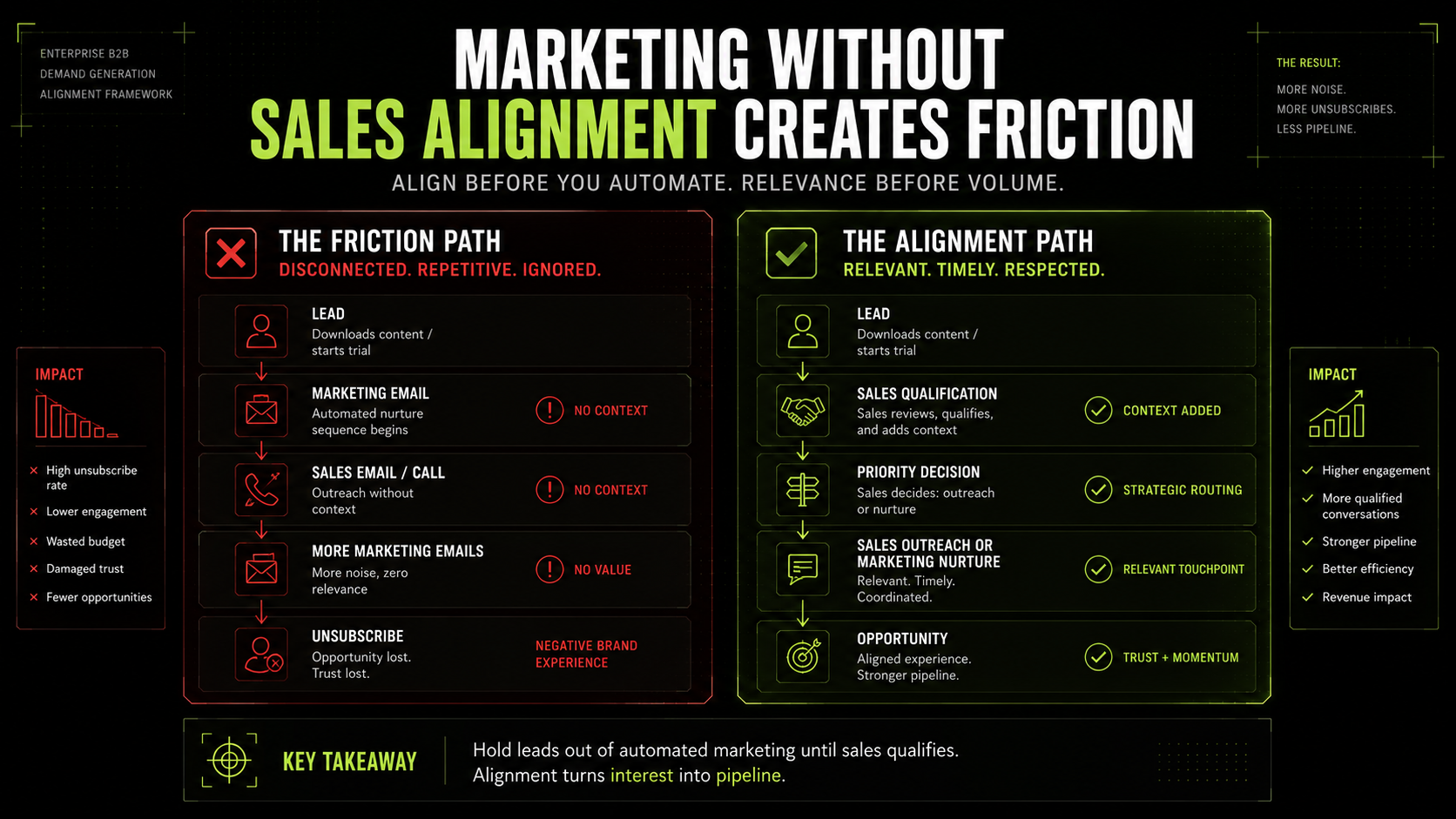
Align Marketing and Sales Before Enrolling Leads in Nurture
Once someone signs up for the bottom-of-funnel call to action, it's time to enroll them in a nurture sequence.
It's crucial that your marketing is aligned with your sales function, because the last thing you want to do is spam this contact with marketing emails and sales touchpoints. That's the fastest way to get them to unsubscribe and develop a negative taste for your brand.
The best thing you can do as a marketer in a highly technical B2B SaaS environment is have consistent touchpoints with your sales team. Practically, this means you want to delay enrolling these contacts into any marketing nurture sequence until your sales team can vet and qualify them as a high-priority or lower-priority lead.
If sales deems the lead high priority, skip the nurture sequence entirely. If sales deems it lower priority, then enrolling them in the nurture sequence is the next best thing.
I can't stress this enough — align with your sales team to avoid frustrating prospects with marketing and sales emails.
Sync Weekly With Your CTO
The last part of your marketing and demand generation arm for highly technical enterprise B2B markets is consistent, clear communication with your chief technology officer.
The CTO understands your product better than anyone else. When you're marketing and developing content around your product, you need to get it as accurate as possible and not overstate or understate the capabilities your solution provides.
Practically, this looks like a weekly sync with your CTO or VP of Engineering to ensure any content getting ready to be released is up to date, vetted, and approved before it's pushed.
This weekly sync can also touch on any feature releases in flight, so marketing is aware and ready to promote them and build demand around those communications.
Track the Right Metrics — Especially Leading Indicators
Everything you're doing should be tracked around some of the following metrics.
Sales cycles are usually longer for enterprise B2B markets, so you need to track leading indicators as well as expected values like SQLs, opportunities, and closed-won deal revenue size.
Some of those leading indicators look like:
- Engagements from target account list companies across organic and paid LinkedIn campaigns
- Signals from target account companies visiting pages on your website via website deanonymization tools
- Brand search volume and month-over-month impression and click share tracked via Google Search Console
These are some of the most important elements to track as leading indicators of success while you build out your pipeline and close revenue.
You'll also want a HubSpot report that tracks MQLs, SQLs, opportunities, and closed-won deals along with pipeline value.
But like I mentioned at the start, if you're just getting started building up demand, it will take time to get consistent MQL, SQL, opportunity, and closed-won deals flowing. The three leading indicators above are great ways to showcase momentum from targeted companies and show how your organic and paid marketing is increasing brand search volume over time.
The Goal: Become a Day-Zero Option
If you follow the tips in this guide, you'll position your brand as a day-zero option — meaning when someone searches for your solution, you're instantly on their list because of the demand generation you built before they identified the need and entered the market.
Written By:
.avif)
If you're looking for B2B SEO or Paid Media expertise, then you've come to the right place.
I am a freelance consultant that works with B2B companies to install systems & cutting edge tactics to improve performance and win more pipeline for your team.
If you like what you read, I strongly recommend watching some of my YouTube content or following me on LinkedIn.
%20(1).png)


Growth Marketing for Highly Technical Enterprise B2B Audiences: A Complete Guide
Growth marketing for highly technical enterprise B2B audiences requires a lot of up-front strategy. Unlike B2B SaaS companies with sales-led or product-led growth strategies, highly technical enterprise audiences have a different mechanism for growth.

Microsoft Clarity Just Quietly Killed a Bunch of LLM Observability Tools
Microsoft Clarity just shipped a feature that wipes out a big chunk of the LLM observability market overnight — and most marketers haven't even noticed yet.
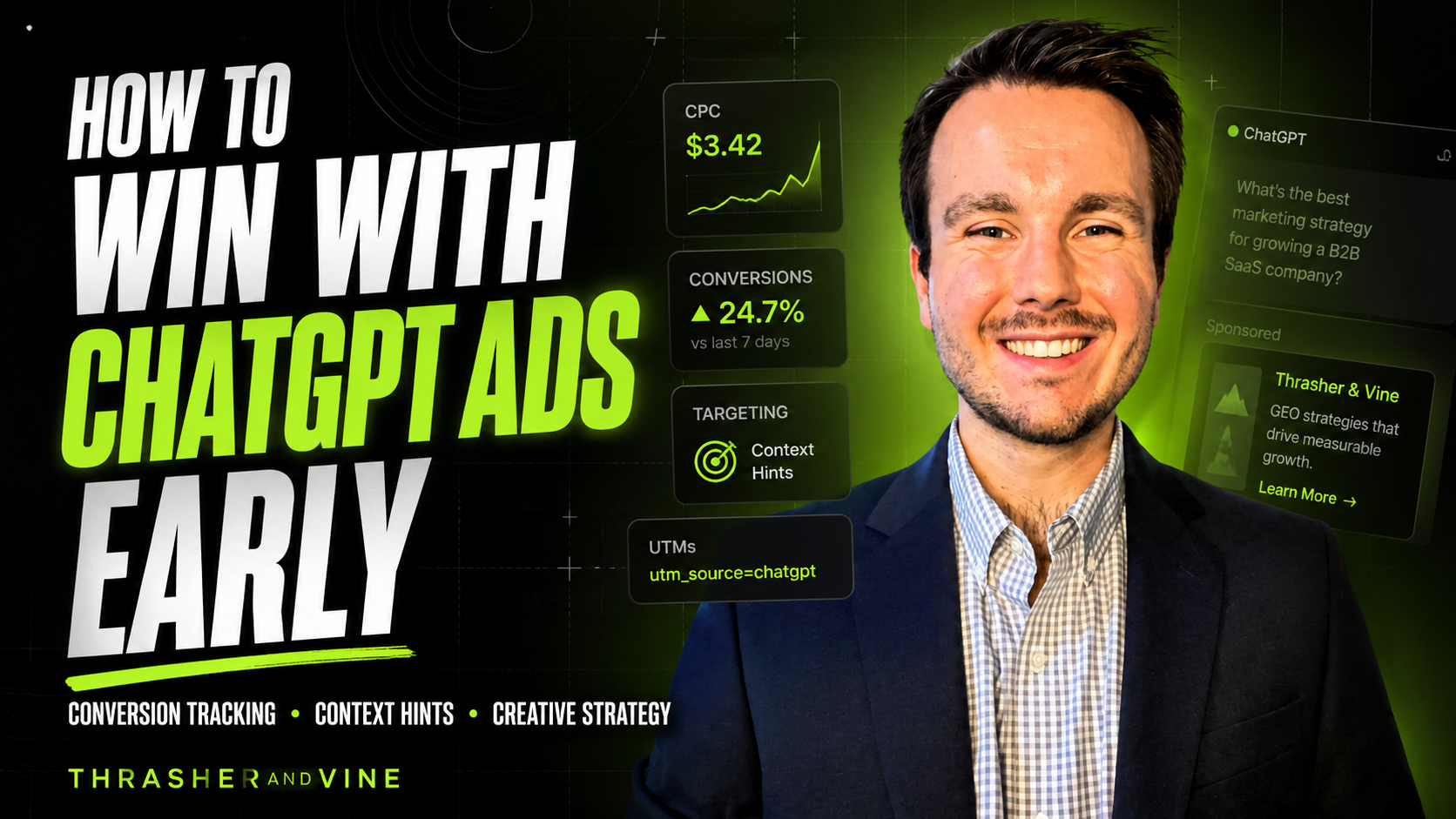
How to Set Up ChatGPT Ads the Right Way (Conversion Tracking, Targeting & Creative Tips)
ChatGPT Ads just opened up to the public as of mid-May 2026 and I've already been inside the platform testing it. In this post, I'm going to walk you through exactly how to set up your conversion tracking, how to think about targeting and bidding, and what your actual ads should look like. Let's get into it.
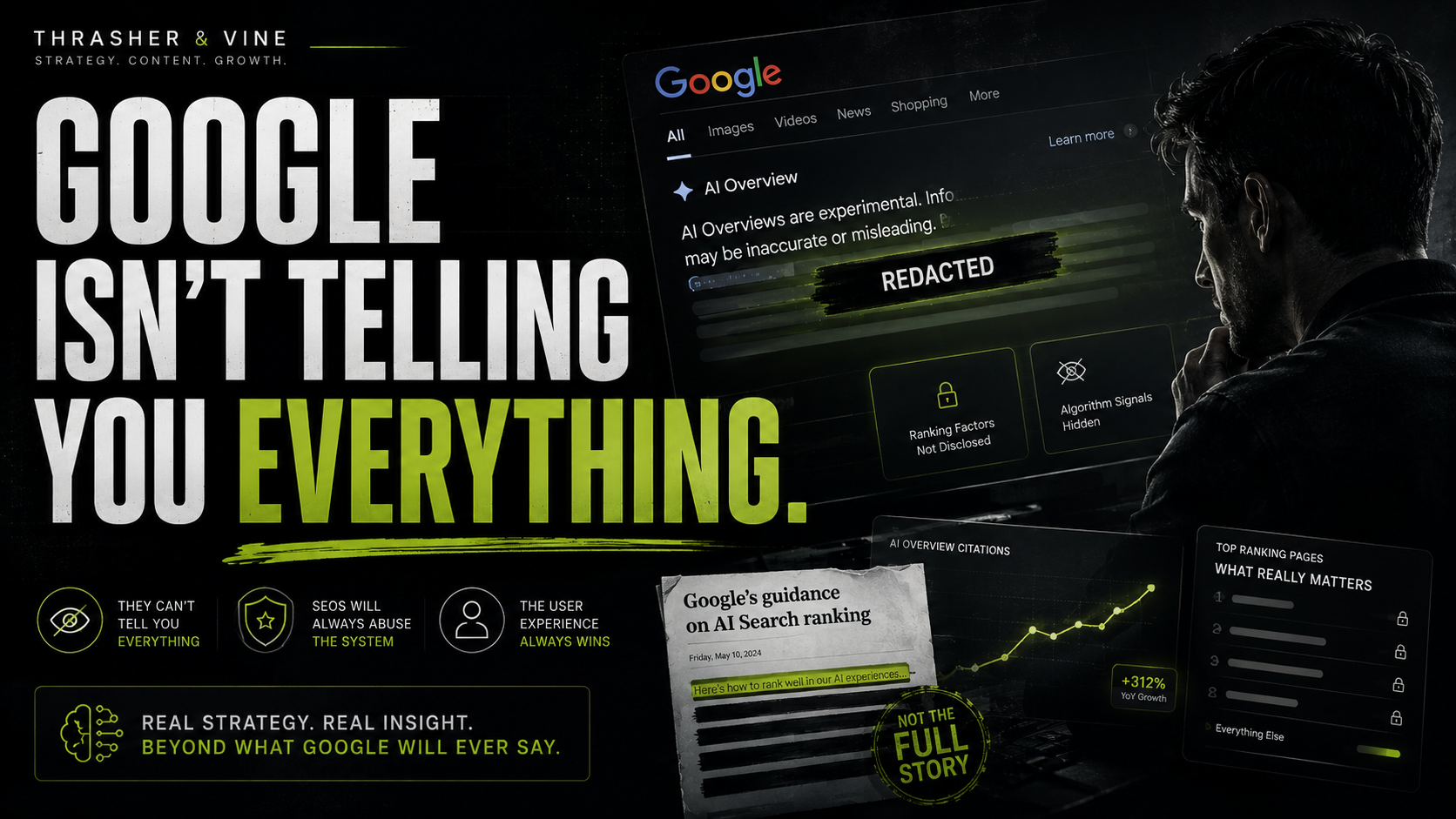
AEO is indeed not dead
These are my recommendations based on Google’s recent guidance on how to rank for AI search…

How We Do SEO, AEO, and GEO for B2B SaaS Companies
The old playbook of running PPC ads for high-intent category terms and building pillared content clusters for impression share no longer works in 2026. That ship has sailed. Brands that recognize this shift are already reaping the benefits of content optimized for LLMs. It’s time for your brand to do the same.
How We Use LLM Query Fanout to Supercharge Your SEO and AEO
Curious about how SEO is evolving? We break down how LLM query fanout helps us create more relevant content and take your AEO game to the next level. Learn how we’re mixing new techniques with traditional SEO to keep you ahead.
.png)
How We Generate Qualified Leads For Our Clients Using Google Ads, SEO, and LinkedIn Ads
Learn how we approach digital marketing from a strategy perspective and how we systematically generate more qualified leads for our clients on a 90-180 day timeline.
.png)
3 Easy Ways to Start Ranking For Your Keywords in 2025
AI Overviews, YouTube Videos & Infographics are today's easiest ways to start ranking for more of your keywords.
.png)
3 Things You Should Do to Ensure Your Website Is Cited in AIOs
These 3 things can exponentially increase the chances of your website ranking in AI Overviews.
.png)
LinkedIn Ads Strategy in 2025: Build Signal-Driven Systems, Not Just Spend
Learn more about how we structure our LinkedIn Ads for B2B brands looking to tap into strong demand generation motions.
.png)
What Is Off-Page SEO? (And Why It's More Important Than Ever)
Learn more about how to significantly increase your chances of being chosen by the AI answers by building brand mentions.
.png)
What Is Technical SEO (and Why It’s Crucial for AI‑Ready Sites with llms.txt)
Learn more about a crucial txt file that your business website needs for AI to see it and reference it in it's answers.
.png)
What Is On-Page SEO (and Why It’s Essential in an AI-First World)
Learn more about on page SEO and how it is different from regular content marketing.