


How Thrasher & Vine Builds Predictable Marketing Pipeline for B2B SaaS Sales-Led Growth Teams
When we talk to founders about their marketing, the conversation jumps straight to the platform they spend the most on. Google Ads. LinkedIn Ads. Meta. That framing is the problem. Marketing is not about Google Ads or LinkedIn Ads or any platform you run ads on. Marketing is about convincing your ideal customer profile that you are the right solution to the problem they are experiencing. The platform comes later.
So when we start with an early-stage or growth-stage B2B SaaS company, we go back to the foundation.
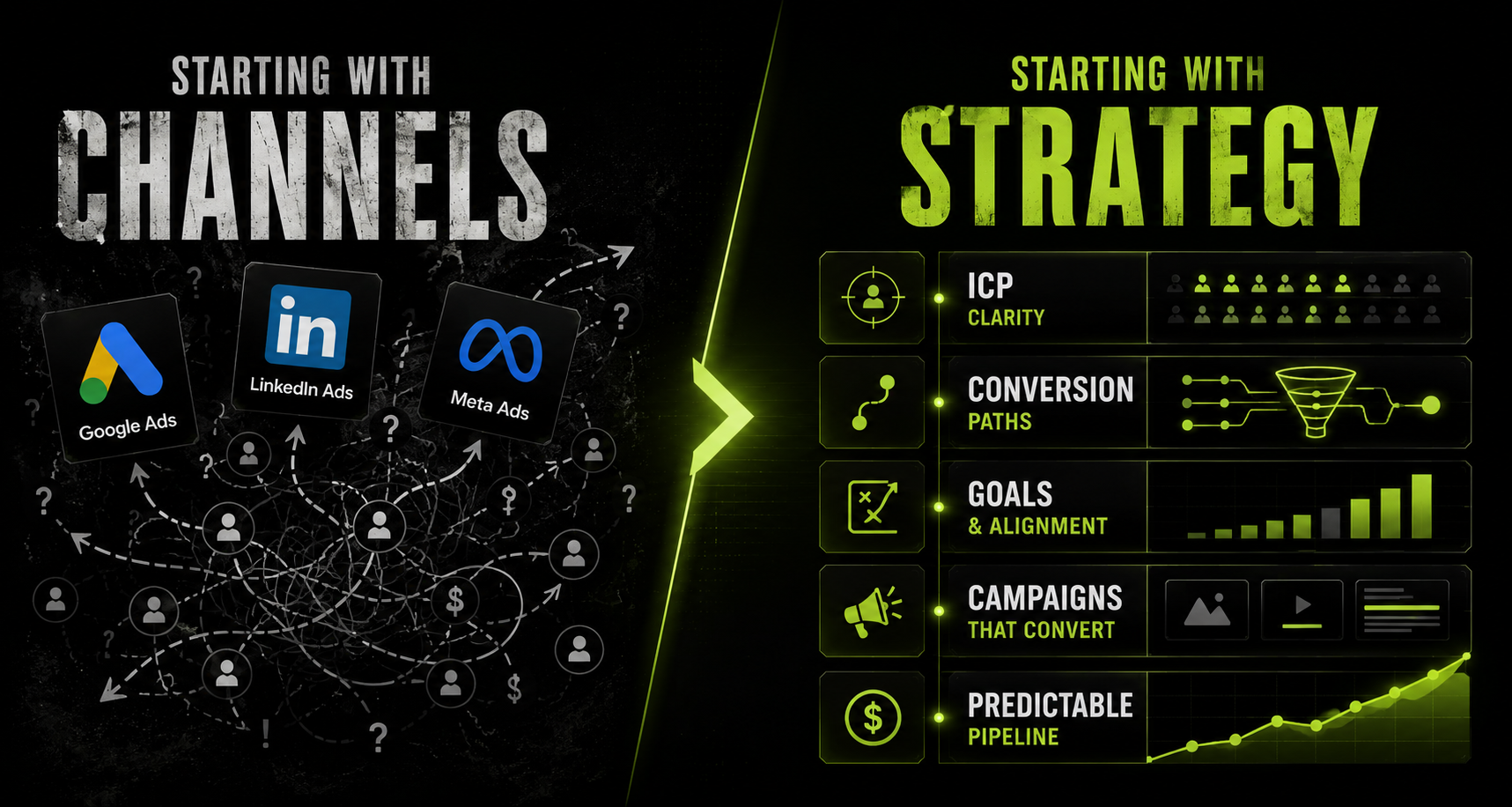
Step One: Rebuild the ICP
We map the champions of your product, the end users who influence the buying decision. Then we map the decision makers, the people who hold the purchasing power and who sometimes use the product themselves or benefit most from its outcomes. Without this clarity, every downstream decision compounds the wrong assumptions.
Step Two: Audit Conversion Paths
Sales-led growth organizations almost always funnel every call to action to a round robin form that books prospects into demo calls. That works at the bottom of the funnel. It does not work for top-of-funnel or middle-of-funnel traffic on your website or owned channels, where prospects are not ready to talk to sales.
We identify alternative calls to action that fit top and middle of funnel, then design ad campaigns around them. At the same time, we audit your existing marketing tech stack and historical performance so we know what is working and what is not before committing to a plan.
Step Three: Build the 90-Day Timeline and Set Goals
We roll the audit findings into a 90-day timeline of campaigns and optimizations, then ladder those into objectives across 90, 180, and 365 days. Setting the ICP, mapping conversion pathways, and aligning on goals are where most agencies and in-house teams fail before they even start. We will not skip this.
Executing the 90 Days
Once the foundation holds, we move into execution. The first step is acquiring a target account list for your champions and decision makers. This list dictates the targeting setup across every ad platform we run.
We choose platforms based on where your ICP spends both their professional and personal time. LinkedIn covers the professional context. Reddit, X, and Meta cover the personal context. The strategies across these two contexts are fundamentally different. Professional platforms carry problem and solution positioning at the top of the funnel. Personal platforms carry educational positioning in the middle of the funnel, where your ICP is on their phone, not in their inbox.
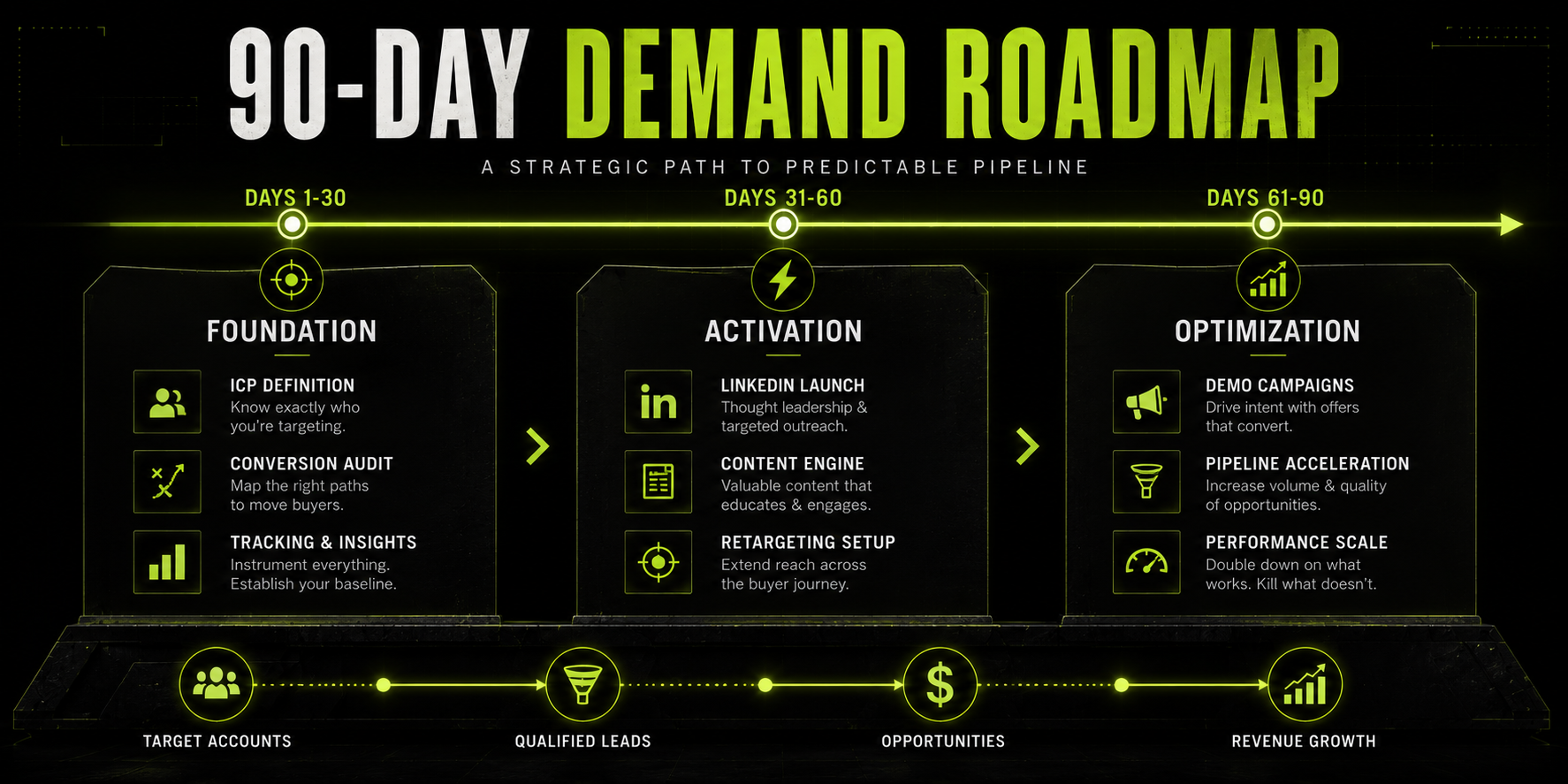
Campaign Structure by Funnel Stage
Top of funnel. We layer your target account lists for decision makers and champions into LinkedIn ads campaigns. We position thought leadership ads from key executives on your team, usually founders and co-founders. We also run single image and carousel ads with problem and solution oriented messaging to drive a steady flow of engagement on your organic and paid LinkedIn assets from the accounts you actually care about.
Middle of funnel. We set up LinkedIn ads that gatekeep valuable thought leadership content through lead generation ads or document ads. The content addresses a common problem with a unique viewpoint or solution, tied back to what your B2B SaaS solves and why it is the best option on the market. These ads are educational, not salesy. We layer in Meta ads on Facebook and Instagram as retargeting variants, usually short form videos or carousels that highlight features and solutions tied to the problems we have identified your ICP encountering. This content is either gated natively on the platform or A/B tested against equivalent content on specific collection pages on your website.
Bottom of funnel. We run LinkedIn lead generation and engagement campaigns that push prospects back to your website or capture demo requests natively. Messaging centers on two offers: an on-demand demo someone can access immediately, or a scheduled call with a sales rep for a white-glove walkthrough of how the product works for their business. We highlight competitor comparisons and concrete business outcomes like cost savings and time savings. These ads run on LinkedIn, Meta, Reddit, X, and any other channel that fits your ICP.
Measurement: Lagging and Leading Indicators
We track performance at the ad channel level and holistically across the entire demand engine, daily, weekly, and monthly. We track in HubSpot, where we monitor the standard pipeline metrics: MQLs, SQLs, opportunities, and closed won deals. We also track leading indicators that show pipeline is building before the deals close:
- Organic engagement from your target account list
- Paid website signals from website de-anonymization tools
- Visits from your target account list to key pages on your website
- Brand search volume month over month, which typically climbs from the halo effect of running ads against your target account list
These signals demonstrate growth while we build toward predictable pipeline.
Monthly Feedback Loops
Two loops run every month:
- Creative refreshes based on the highest-performing ads
- Recycling high-performing organic content from your socials or website into paid placements when it fits your ICP
We watch the performance of every owned asset and repurpose it into ad content whenever we think it will land.
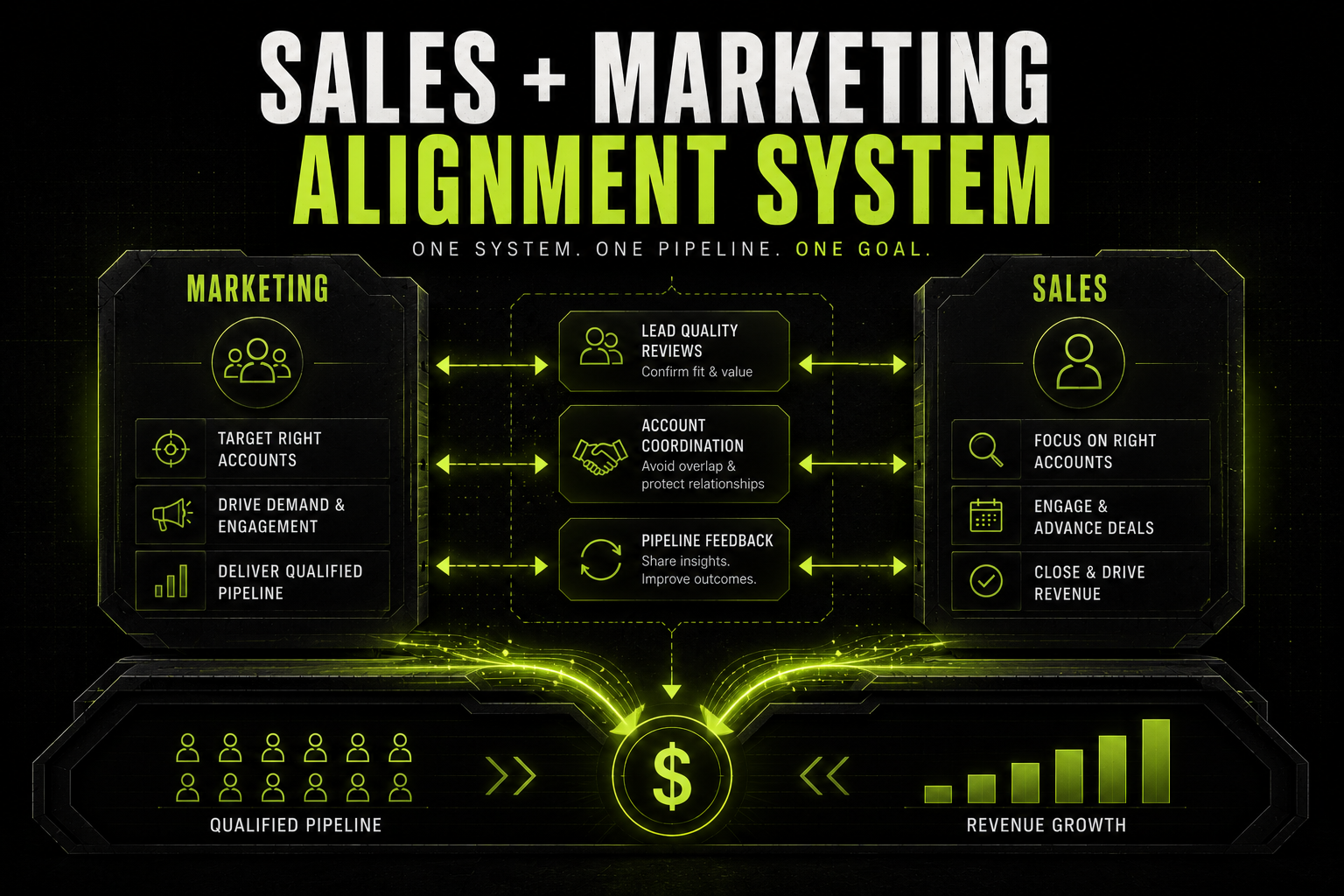
Staying Aligned with Sales
We keep a consistent touchpoint with your sales team throughout. We confirm the leads coming through are high quality and worth their time. We confirm we are not hitting accounts your sales team is already working with marketing nurture sequences, which frustrates prospects and loses deals before sales gets a real swing.
That is how we build predictable marketing pipeline for B2B SaaS sales-led growth teams from seed through Series A. The foundation comes first. The execution follows. The measurement keeps it honest.
Written By:
.avif)
If you're looking for B2B SEO or Paid Media expertise, then you've come to the right place.
I am a freelance consultant that works with B2B companies to install systems & cutting edge tactics to improve performance and win more pipeline for your team.
%20(1).png)


How Thrasher & Vine Builds Predictable Marketing Pipeline for B2B SaaS Sales-Led Growth Teams
B2B SaaS companies from seed to Series A come to us with the same problem: they cannot build channels that drive consistent pipeline, or even reliable marketing qualified leads. We have a hunch about why.

Growth Marketing for Highly Technical Enterprise B2B Audiences: A Complete Guide
Growth marketing for highly technical enterprise B2B audiences requires a lot of up-front strategy. Unlike B2B SaaS companies with sales-led or product-led growth strategies, highly technical enterprise audiences have a different mechanism for growth.

Microsoft Clarity Just Quietly Killed a Bunch of LLM Observability Tools
Microsoft Clarity just shipped a feature that wipes out a big chunk of the LLM observability market overnight — and most marketers haven't even noticed yet.
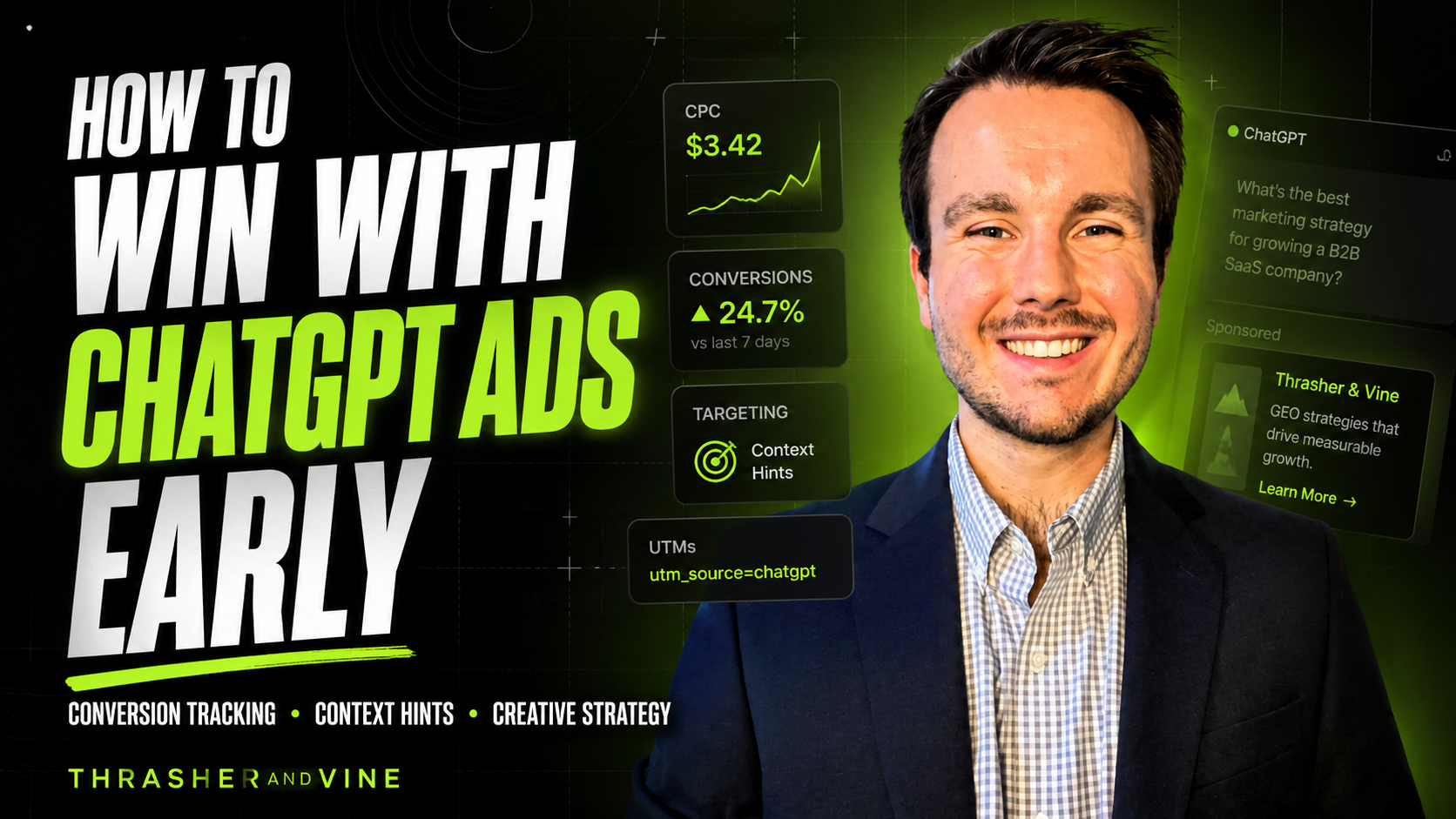
How to Set Up ChatGPT Ads the Right Way (Conversion Tracking, Targeting & Creative Tips)
ChatGPT Ads just opened up to the public as of mid-May 2026 and I've already been inside the platform testing it. In this post, I'm going to walk you through exactly how to set up your conversion tracking, how to think about targeting and bidding, and what your actual ads should look like. Let's get into it.
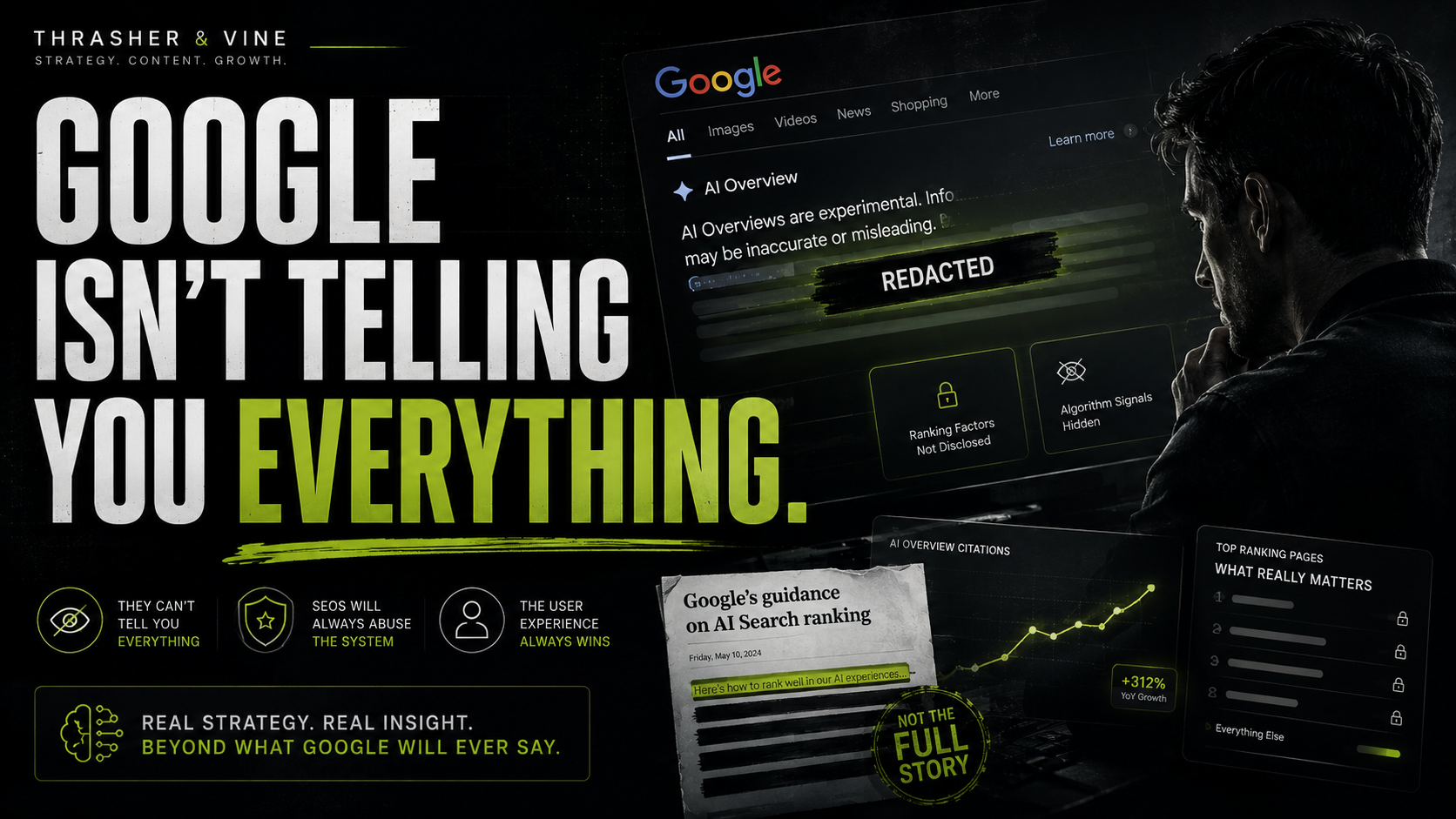
AEO is indeed not dead
These are my recommendations based on Google’s recent guidance on how to rank for AI search…

How We Do SEO, AEO, and GEO for B2B SaaS Companies
The old playbook of running PPC ads for high-intent category terms and building pillared content clusters for impression share no longer works in 2026. That ship has sailed. Brands that recognize this shift are already reaping the benefits of content optimized for LLMs. It’s time for your brand to do the same.


